Embankment gardeners access tips for narrow terraced plots
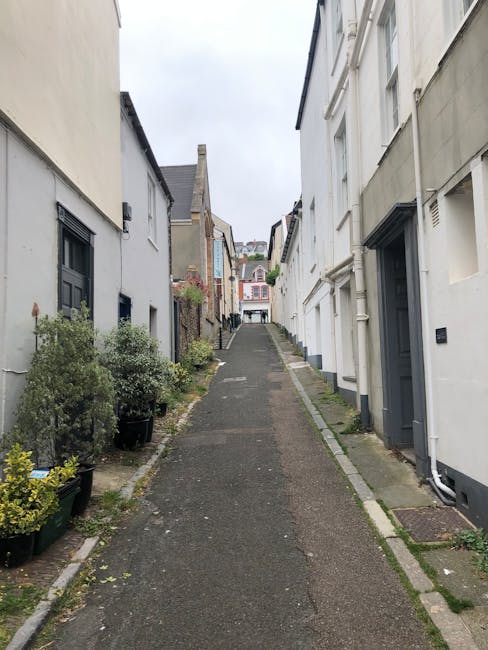
If you've ever looked at a narrow terraced plot and thought, "How on earth do we get anything in here?", you're not alone. Embankment gardeners access tips for narrow terraced plots are really about solving a very ordinary but stubborn problem: making a tight, awkward garden workable without damaging the planting, the paving, or your sanity. In London especially, where side returns, rear alleys, and split-level terraces can be beautifully compact, access planning can matter as much as the planting plan itself. Get the access wrong and even simple jobs become slow, messy, and expensive. Get it right, and the garden starts to feel calm, usable, and far easier to maintain.
This guide covers practical access methods, safety considerations, plant and material choices, and the little details that make narrow plots easier to work in. No fluff. Just the stuff that actually helps on site.
Why Embankment gardeners access tips for narrow terraced plots Matters
On a narrow terraced plot, access is not a side issue. It shapes almost everything: whether materials can be brought in without multiple trips, whether maintenance can happen quickly, and whether bigger jobs like hedge reduction, boundary work, or resurfacing are even practical. In a lot of embankment-style gardens, the land itself adds another layer of difficulty. You may be dealing with a slope, retaining walls, uneven steps, or a long thin layout where one wrong move can mean slipping, crushing beds, or dragging muddy gear through the house.
That is why access planning saves time, protects the garden, and reduces wear on the people doing the work. It also helps you make sensible design decisions early. For example, if you know that bulk compost will need to come through a side gate, you might choose smaller bags or a staged delivery rather than asking someone to carry a giant tonne bag down a cramped path. Sounds basic, but it changes the whole job.
There is also a visual benefit. Gardens with good access tend to look neater because storage, movement, and maintenance have been thought through from the start. And honestly, once you've wrestled a wheelbarrow around a tight corner in the rain, you never underestimate access again.
How Embankment gardeners access tips for narrow terraced plots Works
Good access work starts with a route map. Not an official technical drawing, just a clear picture of how people, tools, waste, and materials move through the plot. You identify the entrance point, measure the narrowest pinch points, note changes in level, and decide which tasks need the most space. Then you match those constraints to a working method.
For example, a garden that only allows shoulder-width movement may need hand tools instead of bulky machinery. A steep embankment may need temporary boardwalks, step protection, or a safer lifting system for soil and stone. A plot with a very narrow side return may be better served by staged deliveries and lightweight materials than by a single large drop. This is less about perfection and more about choosing the least awkward route.
In practice, the process often looks like this:
- Measure the access route, including gates, steps, narrow side passages, and overhead obstructions.
- Identify the heaviest or widest item that needs to come in or out.
- Decide whether manual carrying, small plant, or split deliveries are safest.
- Protect surfaces with boards, mats, or temporary coverings where needed.
- Keep the route clear and consistent while work is underway.
That last point matters more than people think. If access gets cluttered halfway through a job, every next task takes longer. You end up carrying tools over bags of waste, and it all becomes a bit of a muddle.
Where structural changes are being considered, access may also influence the choice of hard landscaping, storage, and boundaries. A plan that works beautifully on paper can fail in a real terraced garden if nobody has checked how the materials will actually get in. For broader planning or layout work, some owners also look at practical landscaping support to make the whole space easier to work with.
Key Benefits and Practical Advantages
When access is handled well, the benefits show up immediately. Jobs are quicker, safer, and usually less disruptive. But the deeper benefit is confidence. You know the garden can be maintained without every visit turning into a small expedition.
- Less damage to planting and paving because movement routes are planned rather than improvised.
- Better safety on slopes and steps since people are not juggling tools and materials blindly.
- Cleaner finishes because boards, sheets, and stable routes reduce tracking mud across the site.
- Lower labour intensity because the workflow is more efficient.
- Smarter material choices since access limits naturally guide the scale and type of products used.
- Easier future maintenance because the garden is designed with movement in mind.
There is a lovely knock-on effect too. Once a narrow terrace is easier to reach, it becomes easier to enjoy. People tend to use their gardens more when they're not mentally bracing themselves for every bit of upkeep. That might sound minor, but it is huge in real life.
And if the plot includes existing hedging, overgrown boundaries, or awkward vertical growth, access planning can be linked to selective pruning or reduction work. A tidy boundary often opens a garden up more than a new feature does. If that sounds familiar, our hedge trimming guidance is useful context for making tight spaces feel less boxed in.
Who This Is For and When It Makes Sense
This kind of planning is useful for a surprisingly wide range of people. You do not need a grand hillside garden to run into access issues. A small London courtyard with a few steps can be just as tricky as a long terraced embankment. The common factor is constraint.
It makes sense if you are:
- managing a narrow rear garden with limited gate width
- working on a sloping terrace where footing is uneven
- bringing in heavy materials like soil, timber, fencing, or paving
- restoring a neglected space that has become hard to enter
- planning regular maintenance and want the process to stay efficient
- trying to reduce disruption inside the house while work happens outside
It is also relevant if you are a homeowner who wants to do some of the work yourself but suspects the access is the real obstacle. To be fair, that is often the sticking point. Not the gardening. The getting-to-the-gardening.
For plots that need more ongoing care, a scheduled approach can help. Some people prefer to combine access improvements with a long-term upkeep plan so the space doesn't drift back into awkwardness. In those cases, routine garden maintenance becomes part of the solution rather than a separate chore.
Step-by-Step Guidance
Here is the practical version, stripped back and honest. If you are tackling a narrow terraced plot, start with the access route before you start thinking about plants or finishes.
1. Measure the route from entrance to work zone
Check gate widths, step depths, turning points, and any low overhead branches or walls that might snag tall tools. A quick tape measure session can save a lot of guesswork later. If there is a slope, measure the steepest part too, not just the average.
2. Identify the awkward items first
What is hardest to move: bags of compost, timber, slabs, waste, or machinery? Work backwards from that. If the heaviest item will not pass through the gate safely, the whole plan needs adjusting.
3. Break the job into smaller deliveries
Instead of one huge bulk order, use staged quantities. In narrow terraces, smaller loads are often easier to handle and less likely to cause damage. It may feel slower at first, but the whole project can actually finish faster because nobody is wrestling oversized materials through a tight route.
4. Protect the route
Use boards, non-slip mats, or temporary coverings where surfaces are delicate. This is especially useful on old brick, decorative paving, or newly laid decked areas. For surface protection and finish care, some owners also look into patio cleaning and maintenance before and after major access-heavy work.
5. Choose the right tools for the width available
Long-handled hand tools, folding carts, compact pruners, and lighter buckets often outperform larger equipment in tight gardens. A smaller tool that you can actually manoeuvre beats a bigger one that sits in the shed.
6. Create a temporary storage point
Set up one designated place for compost, waste, cuttings, or materials so they are not constantly moved about. On a narrow plot, clutter spreads fast. It only takes a few bags in the wrong spot to turn the path into an obstacle course.
7. Reassess after the first session
After one visit, notice what slowed things down. Was the gate too tight? Did the slope make carrying unsafe? Did the turning space need clearing? Then tweak the setup. Most good access systems improve after the first real session; they are rarely perfect on day one.
If you want a broader approach to outdoor improvement, especially where movement and layout are tightly linked, it can also help to read about garden walls and vertical structure as part of a smarter design mindset.
Expert Tips for Better Results
Here is where the small differences matter. The job is not just about getting into the plot. It is about making the journey through the plot calm and predictable.
- Use lightweight materials where possible. Smaller modules of timber, modular planters, and bagged soil are easier to move than huge bulk loads.
- Think vertically. In narrow terraces, you often gain more usable space by growing up, not out. Climbing plants, slim supports, and wall-mounted features reduce floor congestion.
- Keep tools on a loop. If the same hand tools are used repeatedly, keep them in one portable caddy rather than sending someone back and forth.
- Allow for return trips. Access isn't just about going in. Waste, cuttings, and rubble have to come out too. That's where many plans fall apart.
- Watch your footing on damp days. A wet slope or mossy step can turn routine movement into a hazard. It's one of those "obvious in hindsight" issues.
- Use the garden's shape to your advantage. Long thin plots often suit rhythm and repetition: repeated planters, repeated stepping points, repeated storage zones. That consistency reduces friction.
Expert summary: In narrow terraced plots, access is not a separate task; it is part of the design. The best gardens are usually the ones where the route in, the route through, and the route out all make sense.
Truth be told, this is where professional help often pays for itself. An experienced team sees the route problems quickly and can decide whether the work should happen by hand, in phases, or with a different layout altogether. If you are considering a full refresh rather than a one-off fix, garden services in Charing Cross may be worth exploring.
Common Mistakes to Avoid
Some mistakes are small but expensive. Others are just annoying. A few are both.
- Measuring only the gate and forgetting the turning space, slope, or overhead clearance.
- Ordering materials before checking access which can leave you with too much to move or nowhere to stack it.
- Ignoring drainage and slippery surfaces on embankments, especially after rain.
- Using oversized equipment just because it is available, even when it's awkward and unsafe.
- Leaving the route cluttered so every task becomes slower than it should be.
- Assuming one solution fits all jobs when in reality planting, paving, and tree work each need different access logic.
One common example: someone books a delivery of heavy soil for a narrow garden and only then realises the path bends tightly around a brick return. The driver cannot get close enough, the bags are left on the street, and suddenly five people are moving mulch by hand in the drizzle. Not ideal. Not even a little.
For overgrown plots, access mistakes can be made worse by rooted obstacles, ivy, or unmanaged boundary growth. In those cases, clearing the line of travel first is often the simplest win. A useful related read is removing ivy completely, because dense growth can quietly swallow access space.
Tools, Resources and Recommendations
You do not need a van full of specialist kit, but the right few items make a noticeable difference. The aim is to reduce strain and improve control.
| Tool or resource | Best use | Why it helps in narrow plots |
|---|---|---|
| Folding wheelbarrow or garden trolley | Moving soil, cuttings, and light materials | Fits tight turns better than larger carts |
| Long-handled hand tools | Pruning, edging, and planting | Reduces bending on slopes and awkward corners |
| Temporary boards or protective sheets | Safeguarding routes and paving | Prevents damage and improves footing |
| Compact loppers and secateurs | Boundary tidying and light clearance | Portable, precise, and easy to carry |
| Staged storage tubs or bags | Material sorting on site | Keeps paths clear and workflows simple |
For planting in particularly restricted terraces, container-based approaches can be a smart fit because they let you control size, positioning, and access without disturbing the whole garden. If that sounds like your situation, container gardening ideas can help you rethink the layout with much less hassle.
And if the plot needs a fuller visual reset, especially where structure and route clarity are missing, you may also benefit from looking at restoring a neglected garden before adding new features. Sometimes the first improvement is simply making the space readable again.
Law, Compliance, Standards, and Best Practice
For domestic gardens, the main issues are usually practical rather than bureaucratic, but compliance still matters. If work affects shared access, boundary walls, or neighbouring property, it is wise to think carefully before starting. In terraces, that can be a sensitive point. A narrow plot may mean tools, skips, or materials need temporary access through spaces that are close to neighbours or common walkways.
Best practice in the UK context usually means working safely, avoiding unnecessary damage, and being considerate about noise, waste movement, and dust. If a job involves trees, significant structural changes, or heavy boundary work, it may also raise planning or safety questions depending on the site. That is not something to guess at casually. If you're unsure, get the situation checked properly before work begins.
For everyday gardening tasks, the sensible standard is simple: keep access safe, keep routes clear, and avoid overloading the space. It sounds basic because it is basic. But basic done well is what keeps the whole job on track.
Where a terrace has fencing, boundary screens, or structural features near the access route, a careful review is useful before major work. For example, if a path needs opening up or redefined, boundary and fencing work may be part of the answer, especially when privacy and movement both matter.
And if larger trees are shading or blocking the route, or dropping debris across it, it may be time to consider expert assessment. Something like tree surgery support can be relevant when access is compromised by canopy spread, deadwood, or root pressure. Better to deal with that early than after an avoidable incident.
Options, Methods, or Comparison Table
Not every narrow plot needs the same access solution. The right method depends on slope, width, weight of materials, and how often the garden is maintained. Here is a simple comparison that may help.
| Method | Best for | Advantages | Trade-offs |
|---|---|---|---|
| Manual carry | Very tight routes and light loads | Simple, flexible, low equipment needs | Slower and physically demanding |
| Small trolley or wheelbarrow | Moderate-width terraces | Efficient for repeated trips | Can be awkward on steps or steep slopes |
| Staged delivery | Bulk materials on restricted access plots | Reduces overload and clutter | Requires more planning |
| Phased works | Complex or neglected gardens | Controls disruption and improves safety | Longer overall timeline |
| Layout redesign | Recurring access problems | Solves root causes, not just symptoms | Higher upfront effort |
For a quick verdict: if the garden is used frequently and the access is only mildly awkward, a trolley plus staged deliveries may be enough. If the space is steep, cramped, or regularly maintained, a phased or redesigned approach usually makes more sense.
Case Study or Real-World Example
Here's a realistic example from the kind of garden many people recognise straight away. A narrow terraced plot backed onto a raised boundary with only a small gate and a run of uneven steps. The owner wanted fresh planting, tidier edges, and a seating spot at the far end, but every bit of material had to pass through a tight side access. The first issue wasn't the design. It was simply how to move everything without wrecking the existing paving.
The solution was straightforward, though not flashy. Materials were split into smaller loads, the route was protected with boards, and the work was divided into stages. Heavy items were handled before delicate planting began. A few overgrown stems were cut back to widen the movement line, and a portable storage point was created near the entrance so tools did not have to be carried back and forth all day.
What changed most was not just the access. It was the pace. The site felt calmer. There was less shouting over obstacles, fewer pauses to "just move that bag a moment", and the final garden looked tidier because the process had been tidier too. Small thing, big effect.
That kind of project often pairs well with regular upkeep once the layout has been simplified. If you're at the stage where access is fixed but the garden still needs a consistent hand, lawn care support and ongoing tidying can help keep everything under control.
Practical Checklist
Use this before any work begins on a narrow terraced plot.
- Measure gate width, path width, steps, and turning points.
- Check for low branches, walls, pipes, or awkward obstructions.
- Decide what must be brought in and what must come out.
- Choose tools and materials that match the route, not just the task.
- Protect paving, deck, or fragile edges with boards or sheets.
- Clear clutter before starting, even if it feels like a small job.
- Plan for wet-weather footing on slopes and steps.
- Stage waste removal so it does not block the route later.
- Keep neighbours in mind if access or noise will affect them.
- Reassess the setup after the first round of work.
If you can tick most of those off, you are already ahead of the game. Really.
Conclusion
Embankment gardeners access tips for narrow terraced plots are about more than movement. They are about making a constrained space feel workable, safe, and worth the effort. When the route is thought through, the whole garden tends to improve: less damage, less stress, better maintenance, and a much better chance of enjoying the space rather than battling it.
Start with the route. Then the materials. Then the design. That order saves a lot of grief.
If you are facing a tight terrace, a steep embankment, or a garden that feels awkward every time you step into it, a careful access plan is one of the best investments you can make. And once that part is sorted, the rest tends to fall into place with surprising ease.
Get a free quote today and see how much you can save.
Frequently Asked Questions
What are the best access tips for narrow terraced plots?
The best tips are to measure every pinch point, stage materials in smaller loads, protect the route with boards or sheets, and choose compact tools that fit the space comfortably.
How do I move soil into a garden with very limited access?
Use smaller bags or split deliveries, and avoid relying on one large bulk drop if the gate, path, or steps are tight. A trolley can help, but only if the route is stable enough.
Do embankment gardens need special safety planning?
Yes, especially if there is a slope, uneven steps, or slippery surfaces. Safe footing and sensible load sizes matter more on embankments than on flat plots.
Is it better to use hand tools in narrow terraces?
Often, yes. Hand tools are easier to carry, easier to control, and less likely to damage nearby planting or paving. Bigger machinery is not always the smarter choice.
How can I stop muddy footprints and damage during garden work?
Protect the main route with boards or temporary coverings, keep the access line clear, and avoid carrying wet material over delicate paving whenever possible.
Should I redesign the garden if access is always difficult?
If access issues keep causing delays or damage, a redesign can be worthwhile. Sometimes changing the layout is simpler than fighting the same problem every season.
Can access problems affect the cost of garden work?
Yes. Tight access can increase labour time and may require staged deliveries or more manual handling. That is one reason a proper site check is useful before work begins.
What should I check before booking garden work on a terraced plot?
Check route width, step condition, storage space, waste removal access, and any boundary features that could limit movement. If trees or hedging block the route, address those too.
How often should narrow terraced plots be maintained?
It depends on planting and use, but regular upkeep usually works better than occasional heavy clear-outs. In small spaces, a little often is usually kinder than a lot all at once.
Are container plants a good idea for narrow gardens?
Yes, they can be a very good fit. Containers reduce disturbance, allow flexible positioning, and make it easier to manage planting in tight or awkward layouts.
What if my access route goes past neighbours or shared areas?
Be considerate and plan carefully. Keep routes tidy, minimise disruption, and make sure any work that affects shared access is handled respectfully and safely.
When should I ask for professional help?
If the route is very tight, the slope is steep, or the work involves heavy materials or structural changes, professional help can save time and reduce risk. It is often the calmer option, too.
Sometimes the smallest route decisions make the biggest difference. Get those right, and a narrow terraced garden stops feeling like a problem and starts feeling like a place with real character.